

This article discusses suicide and depression.
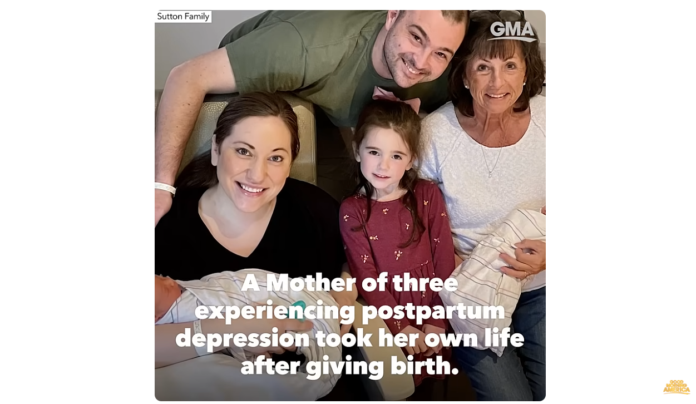
“She was the picture-perfect mom,” says Tyler Sutton of his wife, Ariana. Though she died by suicide just nine days after their twin girls were born, he wants you to know that she loved being a mom. She wanted her twins more than anything. She adored their 4-year-old daughter, Melody. “Ariana was Melody’s favorite person in the world,” Tyler shares.
A Devastating Loss to Postpartum Depression and Psychosis
Ariana Sutton’s tragic passing is a heartbreaking example of how postpartum depression (PPD) and postpartum psychosis steal from mothers and families. The illness convinced Ariana that her three daughters and husband were better off without her. It robbed her of the truth—that she was an amazing, loving, and much-needed mother.
Tyler is now bravely sharing her story in the hopes of saving others.
A Battle They Thought They Were Prepared For
Ariana had suffered from PPD after Melody’s birth, but with therapy and medication, she had overcome it. This time, Tyler thought they were ready.
“I was very nervous,” he told TODAY. “But being a mother was Ariana’s favorite thing in the world. I thought if I stayed vigilant, everything would be OK the second time around.”
They had a plan:
✔ Ariana saw a psychologist weekly.
✔ Her OBGYN was aware of her history.
✔ They were committed to early intervention.
Yet, when the twins—Everly and Rowan—were born a few weeks early, Ariana’s decline was sudden and severe. She had stopped taking antidepressants during pregnancy, fearing the effects on her babies. That well-intentioned decision may have had devastating consequences.
“I never dreamed this could happen. It came on so rapidly, so suddenly,” Tyler says.
The Silent Battle in Her Mind
Experts believe Ariana’s rapid decline could indicate postpartum psychosis, a more extreme and dangerous form of PPD.
Tyler remembers how Ariana once described postpartum depression:
“It was like a little, very negative person took up residence in her head,” he recalls. “That little person would drown out all the positive things people told her. It would scream at her: ‘You’re a bad mom! You’re not doing your job! This is your fault! Everything’s your fault!’”
Even though Ariana showed signs of PPD after the twins’ birth, Tyler truly believed they were facing it together. That’s why, on the morning she died, he thought she was doing better. She had gotten up, pumped milk for the babies—something that was usually difficult for her in the mornings.
Then, he left for errands. And she left a note.
