

Politics in the Pews
Few forces have accelerated deconstruction more dramatically than political polarization.
In the United States, evangelical Christianity has become closely intertwined with political identity, particularly since the late twentieth century. For some believers, this alignment between faith and politics has created a sense of moral clarity. For others, it has produced deep discomfort.
Surveys show that disagreements over political messaging in churches can push congregants away. Some Christians report feeling that sermons increasingly mirror partisan rhetoric rather than spiritual formation. Others worry that the public perception of Christianity has become inseparable from political ideology.
The tension is particularly pronounced among younger Christians who may share certain moral values with their churches but disagree with the political frameworks through which those values are expressed.
When faith becomes entangled with political identity, deconstruction often follows as individuals attempt to separate their spiritual convictions from cultural or partisan expectations.
The Cultural Collision
The broader cultural landscape has also shifted dramatically in ways that place pressure on traditional religious beliefs.
Issues related to gender roles, LGBTQ identity, mental health, and scientific understanding have become central to public discourse. In many conservative Christian contexts, long-held teachings on these subjects now collide with the social realities younger believers encounter daily.
Research from the Public Religion Research Institute has found that among people who identify as “exvangelical,” 58 percent cite negative views toward LGBTQ people as a factor in leaving, while roughly half say their religious experiences harmed their mental health. (Word&Way)
For some believers, the tension feels irreconcilable. They conclude that Christianity itself must change—or that they must leave it behind.
Others attempt a different approach: separating the teachings of Jesus from what they perceive as cultural distortions of Christianity. In these cases, deconstruction becomes a process of theological reconstruction.
Doubt in the Age of Information
Another reality shaping modern faith journeys is the unprecedented accessibility of information.
For most of Christian history, theological debates occurred among scholars and clergy. Today, anyone with a smartphone can access centuries of biblical criticism, archaeological debates, and philosophical arguments within seconds.
This abundance of information has democratized theology—but it has also destabilized traditional authority structures. Believers encountering unfamiliar interpretations of Scripture may find themselves reevaluating doctrines they once accepted without question.
The result is often a cascade effect: one question leads to another, and another, until the entire framework of belief is under examination.
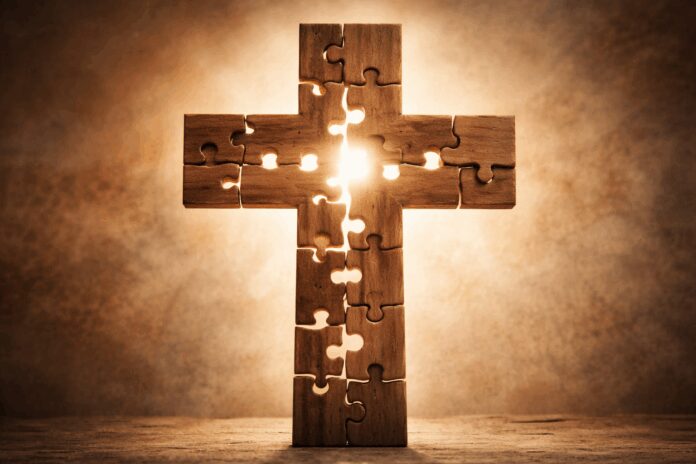
Yet for many Christians, this questioning is not necessarily destructive. Historically, theological reflection has always involved rigorous debate and reinterpretation. In that sense, deconstruction may simply be the modern expression of an ancient process.
Inside the Church Walls
Interestingly, pastors themselves are increasingly aware of the phenomenon. A survey of Protestant clergy found that 73 percent of pastors say they are familiar with the concept of faith deconstruction, and 27 percent report that people in their churches have experienced it. (Lifeway Research)
However, many pastors believe the movement may be more visible online than in their congregations. Social media amplifies personal stories of faith crisis, sometimes giving the impression that deconstruction is universal.
The reality is more nuanced. Some believers who question their faith ultimately leave Christianity altogether. Others return to church with a deeper, more reflective spirituality. Still others remain in limbo, unsure where their spiritual journey will lead.