


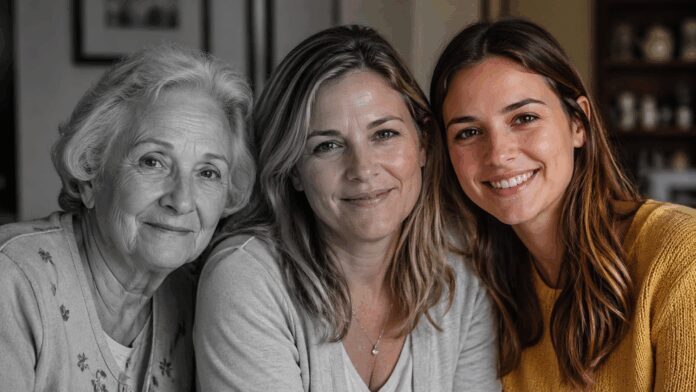
At 6:30 a.m., the house is already loud. A middle-schooler is searching for missing soccer cleats. A teenage daughter needs a ride to early band practice. Somewhere between packing lunches and answering work emails, the phone rings: Mom fell again last night.
For millions of American women in their late 30s, 40s, and early 50s, this is not an extraordinary day. It is ordinary life inside what researchers call the “sandwich generation”—adults simultaneously caring for kids and their aging parents.
The Sandwich Generation
According to the Pew Research Center, nearly half of adults in their 40s and 50s have a parent over 65 while also raising children or financially supporting adult children. About 15% are providing financial support to both generations at the same time.
The phrase sounds clinical. Its reality is exhausting.
For many women, especially mothers already balancing careers, marriages, and households, the emotional and financial strain can feel relentless. And unlike previous generations, today’s caregivers are often doing this work during years that were once expected to be financially productive and professionally stable. Instead, many find themselves caught between college tuition payments and astronomical memory care bills.
RELATED: The 5 Financial Mistakes Christian Women Make in Their 50s
“The increased pressure is coming primarily from grown children rather than aging parents,” researchers at the Pew Research Center observed in a landmark report on multigenerational caregiving. The pressure has only intensified in recent years. Americans are living longer. Many parents delayed having children until their 30s or later. Adult children are also remaining financially dependent longer because of housing costs, student debt, and economic instability.
The result is a demographic collision: women in midlife simultaneously parenting teenagers or supporting young adults while navigating dementia diagnoses, medication schedules, assisted living decisions, emotional battles, and late-night emergency calls from elderly parents.
For Christian women, the burden often carries an additional moral weight. Many were raised to believe caregiving is not merely responsibility but calling. Honoring parents, serving family, sacrificing for loved ones—these values are deeply embedded in faith communities. Yet the emotional complexity of caregiving rarely fits neatly into inspirational slogans.
There is resentment alongside devotion. Fatigue alongside gratitude. A woman may spend the afternoon helping her father fill out Medicare paperwork before rushing home to help her son with algebra homework. She may feel guilty for snapping at her husband after spending hours coordinating home health aides. She may also quietly wonder whether anyone is caring for her.
Researchers increasingly warn about the mental-health consequences of this dual role. Recent caregiving data highlighted by caregiver advocacy groups found high levels of emotional stress and burnout among family caregivers, many of whom are balancing paid work and caregiving responsibilities simultaneously. The burden falls disproportionately on women.
RELATED: Dusty Wildman: The Ordinary Kitchen Accident That Changed One Family Forever