"I don’t know who this lady is... she waved at him and he made his way up to her. I thought their interaction would be the same as last time but I was wrong. "
"I felt the tug on my sleeve and looked down to find him standing motionless. His mouth was moving but I couldn’t make out his words. His quiet body in the noisy room caught me off guard. I bent down to find his voice."
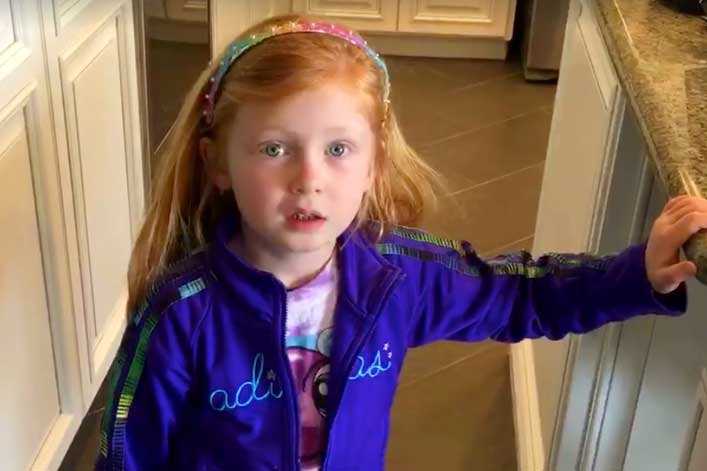
The adorable little redhead from Los Angeles raised some eyebrows when she candidly told her teacher, “Weed is not good for you and we have a lot of it.”
Her follow up statement that they “grow a lot of it” was certainly no less concerning for the alarmed educator.
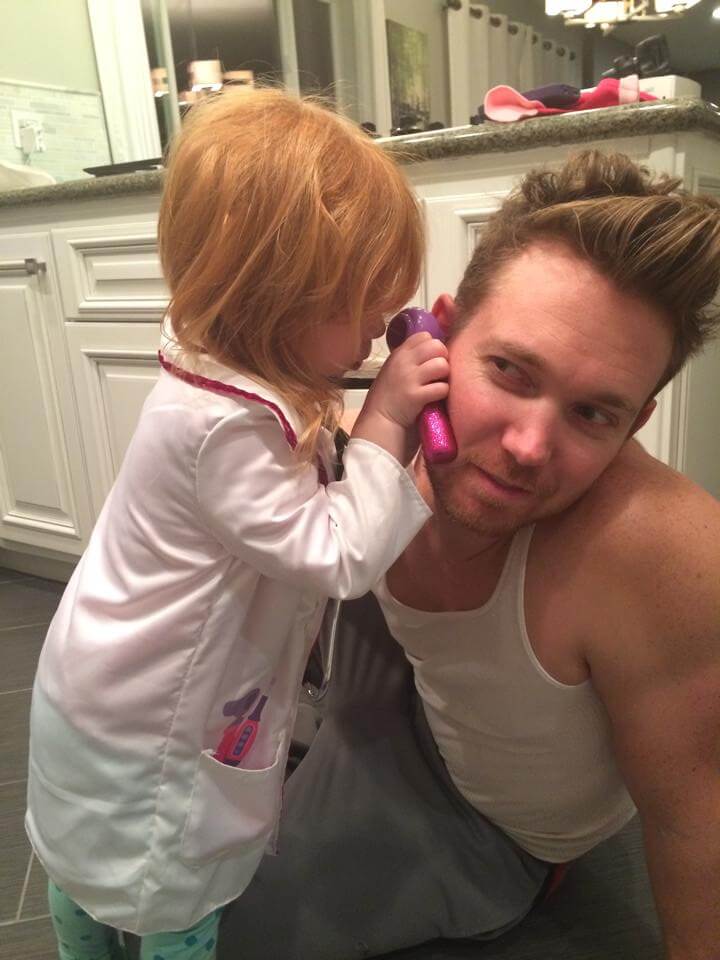
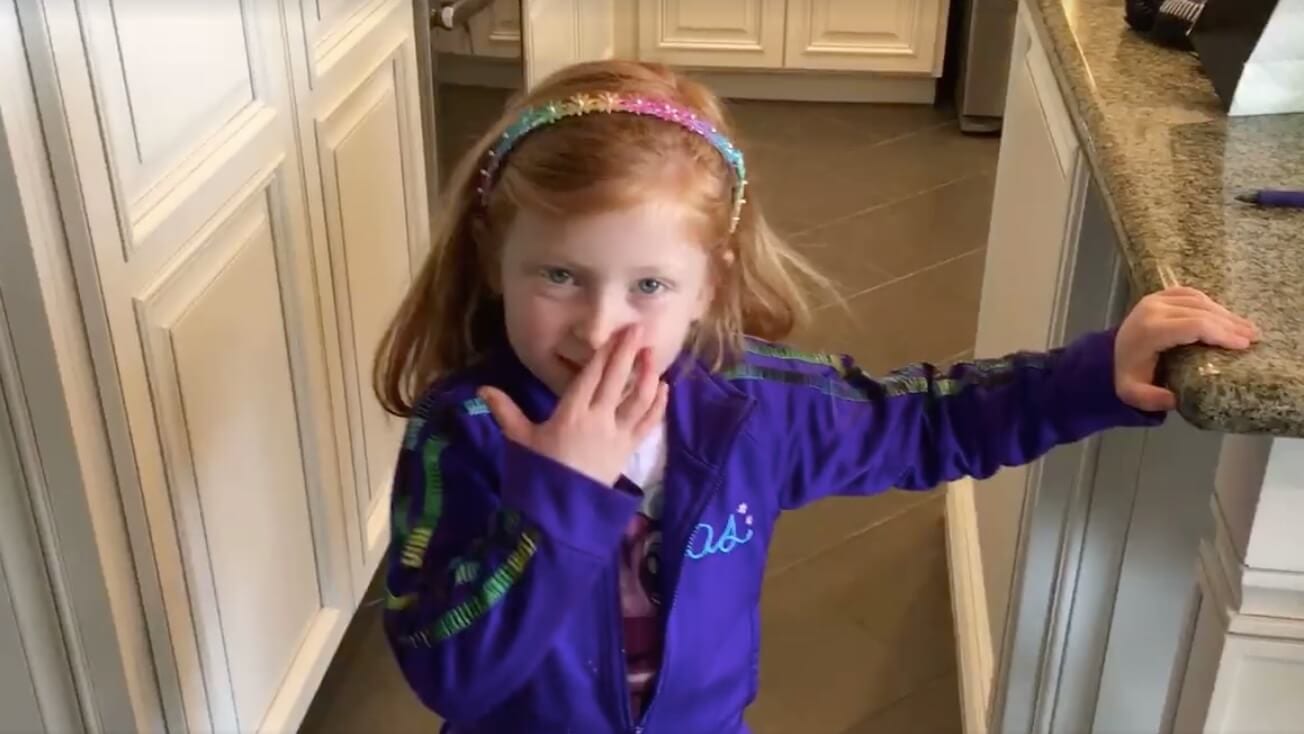
But thankfully, a sense of humor is one thing this dad is not lacking. In an effort to get his daughter to expound upon her “weed story,” Dax patiently recorded her as he asked a series of questions.
The oblivious Skylar opened in saying, “Weed is not good for you, because weed is stuff that is like grass but it’s not, it’s weed.”
Courtesy of Dax Holt
Well THAT explains it! Duh, dad.
As the amused father pries into the psyche of his little girl whose naive innocence nearly got him in BIG time trouble, he hilariously gets to the bottom of this not-so-tall tale.
Turns out, Skylar was right…sort of. Watch as Dax and Skylar bring this adorable discrepancy to light in their infectiously funny home video that has the Internet ROLLING in laughter.
My child’s teacher: “So Skylar tells me you guys have a ton of weed at home.”
Me: “Umm”
Teacher: “She said you’re growing it.”
Me:
“She was the picture-perfect mom,” says Tyler Sutton of his wife, Ariana. Though she died by suicide just nine days after their twin girls were born, he wants you to know that she loved being a mom. She wanted her twins more than anything. She adored their 4-year-old daughter, Melody. “Ariana was Melody’s favorite person in the world,” Tyler shares.
A Devastating Loss to Postpartum Depression and Psychosis
Ariana Sutton’s tragic passing is a heartbreaking example of how postpartum depression (PPD) and postpartum psychosis steal from mothers and families. The illness convinced Ariana that her three daughters and husband were better off without her. It robbed her of the truth—that she was an amazing, loving, and much-needed mother.
Tyler is now bravely sharing her story in the hopes of saving others.
A Battle They Thought They Were Prepared For
Ariana had suffered from PPD after Melody’s birth, but with therapy and medication, she had overcome it. This time, Tyler thought they were ready.
“I was very nervous,” he told TODAY. “But being a mother was Ariana’s favorite thing in the world. I thought if I stayed vigilant, everything would be OK the second time around.”
They had a plan:
✔ Ariana saw a psychologist weekly.
✔ Her OBGYN was aware of her history.
✔ They were committed to early intervention.
Yet, when the twins—Everly and Rowan—were born a few weeks early, Ariana’s decline was sudden and severe. She had stopped taking antidepressants during pregnancy, fearing the effects on her babies. That well-intentioned decision may have had devastating consequences.
“I never dreamed this could happen. It came on so rapidly, so suddenly,” Tyler says.
The Silent Battle in Her Mind
Experts believe Ariana’s rapid decline could indicate postpartum psychosis, a more extreme and dangerous form of PPD.
Tyler remembers how Ariana once described postpartum depression:
“It was like a little, very negative person took up residence in her head,” he recalls. “That little person would drown out all the positive things people told her. It would scream at her: ‘You’re a bad mom! You’re not doing your job! This is your fault! Everything’s your fault!’”
Even though Ariana showed signs of PPD after the twins’ birth, Tyler truly believed they were facing it together. That’s why, on the morning she died, he thought she was doing better. She had gotten up, pumped milk for the babies—something that was usually difficult for her in the mornings.
“Reemerging into the world after leaving an abusive partnership is…terrifying. It’s particularly challenging learning how not to wear your insecurities like a glittery cocktail dress, drawing every eye in sight to attention. My particular cocktail began as self-doubt with a splash of inferiority. Then six months into marriage, my doting husband—the mega church pastor—added his own twist to the potent concoction: a double shot of disdain with a generous pour of chastising, gaslighting, and blame, shaken with a bit of mockery, and finished with a twist of zesty disgust at the mere sight of me. He would usually offer an icy chaser in the form of an unrelenting verbal attack—bringing me to the point of drunken stupor—or (his favorite) sobering me up by stonewalling me for days with intricate deliberation. The life I found myself in was not unlike how it might feel to be a stray dog in the street—full of mange and starving for life, thoughtlessly avoided but never actually sought after to be cared for, spoken to, or protected. I had been pounding this cocktail for a decade, and what began as poison slicing my voice as it made its way down my throat eventually became the standard by which I classified normal.
Normal that men pretend to adore women at first then become monsters once they’ve signed the marriage license or tied them down with a child. Normal to feel duped, trapped, and foolish for actually choosing this person to marry (of ALL the men in the world!). Normal, having canker sores all over my mouth, shingles at the age of 24, and pinched nerves every six weeks for years on end. Normal, being ‘coached’ on what can and cannot be said to friends/bosses/family members/strangers. Normal, never quite knowing if I’m safe or in danger when he’s around. Normal is the sinking hollow in my chest and gut when I lay down in the quiet of the night. Normal is not knowing if I actually am alone in the world or if I really do have someone in my corner. Normal, not recognizing the woman staring back at me in the mirror (or is that a skeleton? It’s hard to tell). Normal when lies are the truth and the truth are all lies.
The poisonous cocktail of abuse destroys a person’s ability to decipher normal.
In logic, I knew I was human, but I only ever felt like worthless trash, unapologetically crumpled and tossed away. I was desperate for proof I was actually visible to other humans. I clung to humanity as best I could, holding every eye that acknowledged my existence at the grocery store or passing along the sidewalk, hanging on every word when people spoke kindly to me, and gaping in disbelief when I saw the ‘fairy-tale freak-husbands’ who were attentive, gentle, and supportive of their wives (they were clearly putting on a really good act…but for whom? I couldn’t ever figure out why they went out of their way to keep up the persona of ‘doting husband’ at times when it seemed so unnecessary—like in the parking lot or the driveway of their own home—who were they trying to fool? Who did they think was watching? I never did understand men’s trickery. It was baffling and frustrating).
One day the entire filthy trance came to a screeching halt when my daughter innocently and valiantly stood for justice (and the preservation of her mother’s dignity). At just five years old, she interrupted one of her daddy’s eerily controlled, but fiercely charged beratements and locked eyes with me. ‘I love you, Mommy. I love you. MOMMY! I love you.’ And that—it turns out—was the slap in the face I needed to end the cycle which was swallowing me whole. No more throwing back twisted cocktails of abuse. No more waking up sloppy and emotionally hungover. And no more spending days spinning out dazed and confused.
It was over.
I blinked hard and fast. What was this feeling? It was like someone had poured cold water over my head after being coated with sweat for years in the raging sun. The truth was coolly washing away the stickiness of the emotional abuse I had caked on every inch of my skin, my lips, my eyelids. I was beginning to see things as they were. I could move about as I chose for the first time in years. I even tried flexing and stretching again—my muscles and my will. It was equal parts liberating and horrifying. I could breathe—like actually inhale without a concentrated effort.
And there was something else. Something strange, but familiar, creeping towards me. It was light and airy, but dashing and flighty. I couldn’t put my finger on it for days; each time I was close, it would disappear. But finally, I found the courage to reach out and touch it. It was the enchantment of my childhood, but I had not seen it for quite some time. It was hope. Oh, no. I won’t dare hold onto hope again. It’s too dangerous. Too unpredictable. Too scary for someone like me to keep around. I was no fool. I knew how dark and twisted life—and people—could be. I wouldn’t fall into that trap again. Not ever.
Courtesy of MaryBeth Koenes
But eventually, it was hope which would carry me through the horror of facing my reality: I was a victim of domestic violence. I argued with this one for a long time. After all, he was a pastor and he never laid a hand on me. How could I be a victim? It was hope which gave me the courage to ask questions, seek help, and absorb the truth. The truth is abuse isn’t just physical—it’s mental, emotional, financial, spiritual. It isn’t always classified by bruises on skin, but on the often unseen power and dominance over another person. That, I couldn’t argue with. Intimidation and control were the staples of his power over me. Seemingly strong and confident as I was, I was no match for his twisted words and constant power plays. I also learned there is no certain ‘type of victim.’ Abusers prey on the fragile and the strong, the broken and the successful, the isolated and the known.
Hope led me back to my will. My will carried me straight to my power. And my power broke the chains of my addiction to this cocktail of abuse. See, it wasn’t enough for me to realize anyone could be a victim of abuse—how was that going to help me avoid getting into a similar situation again? I needed more data. I had to know what it was in me which led me to choose and stay with my abuser. I went on a mission to excavate the previous 10 years of trauma and go back to the beginning: to study every choice I made, every choice I ignored, and every choice I gave up. I had to know so I wouldn’t do this again. I had to know so I could protect my kids from it and teach them how to watch for signs. I had to know so I could help other victims.
See, for victims of abuse, their sense of self is hidden behind some locked doors—usually labeled fear and insecurity. Sometimes those doors have boards nailed over them called lies, loss, rejection, and failure. On the other side of those fears and insecurities are all the tightly taped boxes of bad beliefs we victims—like hoarders—tend to hold onto: ‘I’ll never find better. It’s not really that bad, sometimes it’s good. I’m not good, worthy, or enough. No one will believe me. I’m stupid, small, and meaningless. I’m not strong enough. I can’t do this alone. I’m nothing without him/her. He/she will take the kids from me. He/she will ruin me. I am ruined. No one will ever want me now. I am broken.’ Once those bad beliefs are removed, under the floorboards lie the mounds of self-doubt and self-abandonment we accumulated along our journey through hell.
And it’s this overhaul of the cobweb-filled home, decked with labor to bear which keeps victims in the ties of their abusers. It’s nothing less than overwhelming to face this house of horrors—at least when we try to do it alone. In fact, I would venture to say it’s impossible to do alone, without any help or support along the way. It’s the death of a soul—this abandoned wreckage we find ourselves in. Without hope—a lifeline, the right tools, and a circle of support—it’s absolutely paralyzing to face.
This is where my work began: my quest to understand victims of abuse. Me.
Five years later, I’m here, coaching women (and men) through their own stories of toxic cocktail consumption. I throw lifelines, hand over tools, and whisper truth to those who walk their own path of abuse. I get to do this now because I found the key to freedom. I know where the gift of empowerment hides within the soul. Every story is a little different, but every soul holds the same power—the power to fight, live, heal, love, and be whole again. They call this kind of power self-worth, and I know where and how to find it.
This is what we all need to be talking about—friends, family, survivors, advocates, officers, social workers, teachers, clergy. Leaving intimate partner abuse isn’t a simple decision. It isn’t a matter of ‘just doing it already’ or even a matter of ‘finding the courage.’ It takes bravery AND resilience, a fleck of clarity AND the stamina to see it through. Victims need shoulders to cry on, arms to hold them up, caretakers to watch their children, resources to cover their needs, and time to walk out their healing. And not just for a month or even a year. Sometimes they won’t even see the post-traumatic stress until years after they are out of their abuser’s reach. The healing process for victims of abuse can neither be predicted nor formulated. Each of us are unique in the way we cope with the devastation of where our story has led us.
But, no matter who you are (victim or not) and no matter what your story (touched by abuse or not), the cycle of abuse will always begin to end with this: talking. So, speak. Use your power and share your words. Reach out. Lean in. We’re all around you, 1 in 4 of us—victims and survivors alike. Just do me one favor: Never underestimate our power to survive and heal.”
Parents know changing babies in public can be a messy and challenging matter as it is. Now, imagine having to get the whole job done on your LAP, like Florida father Donte Palmer.
“This is a serious post! What’s the deal with not having changing tables in men’s bathroom as if we don’t exist!!” the fired-up dad wrote in an Instagram post. “#FLM#fatherslivesmatter – Clearly we do this often because look how comfortable my son is. It’s routine to him! Let’s fix this problem!”
Donte explains in a post shared by Love What Matters that the reality of the problem hit him one evening when he decided to treat his wife and family to dinner at a nice restaurant.
“This particular day was like any other day,” he wrote. “My family and I gather together in the car to do some much-needed errands throughout town. Wanting to treat my wife to a nice family dinner, because she’s a very hard-working mom, l decided it would be nice if the family ate out this particular night.”
After ordering food, his 12-year-old had to go to the bathroom, so the father of three boys decided to kill two birds with one stone by accompanying him to change his youngest son.
“I’m used to going places and changing my son on my lap, which is why, as you can tell in the picture, my son is comfortable with this routine of ours,” wrote Donte. “The only difference is, my oldest son (who was my helper this time around), was not only handing me wipes and diapers, but he also took some snapshots in the mix of things.”
Upon getting back to the family’s table, the 12-year-old thought it would be hilarious to show mommy ‘how daddy changes his little brother (on his lap).’
Everyone laughed about how comfortable the little boy was just lying on daddy’s lap, but his wife noticed something strange:
“My wife took notice that she’s never had to change him this way. There’s always a changing table when she goes into restrooms. Especially restrooms in restaurants as ‘fancy’ as we were eating in.”
When moms go into a public bathroom, there never seems to be a problem finding a changing table, so why the huge difference for dads?
Because changing his son is pretty normal for him, Donte really didn’t think a thing of it until it was brought to his attention at the restaurant.
“Is our lack of fatherhood that bad in our society where restaurants don’t even bother to put changing tables in men’s restrooms?” he questioned.
He said his intent is not to rally a “Million Man Father’s March” nor protest the need for dad’s equal rights, but Donte does have one hope:
“I just hope this post shows there are good fathers out there who step up to the plate every day. Who don’t mind staying up all night with a crying baby, or changing diapers (even if it’s not the conventional way of doing it).”
All the praise to this attentive father who is willing to go above and beyond for his children, even when the convenience factor is missing. I pray that he’s an inspiration for other dads to do the same.
You are too young to understand this now, but one day years from now you may find yourself looking for a man to marry.
And from now until that day comes I will pray to God above you’ll find someone who loves you the way your daddy loves me and who will love your children the way your daddy loves his.
I don’t mean it has to “look” the same, but what I do mean is that I hope you get to feel the way I do being married to your dad.
For me — it’s not about how many times he tells me I am beautiful or even how often he says the words “I love you.”
It’s not about presents on special occasions or surprises on random evenings.
It’s not about the money he makes, the places he takes us, or the picture he paints for our future together.
What it is about — what our love is all about — is the little bits of energy woven into the simple, ordinary moments of each and every day that we live through together.
It is his steady hand when my soul is anything but.
It is his smile from across a crowded room when he knows we are thinking the same thing.
It is the way he forgives, the way he listens, and the way he shows up for us again and again.
It is the way he tries every single day to find the most meaningful ways to connect with you.
It is the way his patience and humility can surpass even mine when we are being tested as parents.
It is the way he works hard to understand and uplift each of his children.
It is the way he always comes home to be with us, to spend quality time with us, to love us the best way he knows how.
For me, it’s not about anything fancy or flashy or over-the-top.
For me, it’s about how he makes me feel during the regular, everyday routines of our lives.
My little girl, your daddy makes us feel loved not because of anything grandiose that he does, but because of all the little things he does time and time again.
And so, one day years from now you may find yourself looking for a man to marry.
And from now until that day comes I will pray to God above you’ll find someone who loves you the way your daddy loves me and who will love your children the way your daddy loves his.
I folded laundry and washed dishes and picked up mismatched socks and stray Legos. I swept up scrambled eggs from breakfast and chicken nuggets from lunch.
I helped my oldest son organize the Crayons in his art set and my youngest son put away the rubber food that goes to his play kitchen.
I barely sat down, and I’m pretty sure the afternoon cup of coffee I was looking forward to is still sitting on the Keurig tray.
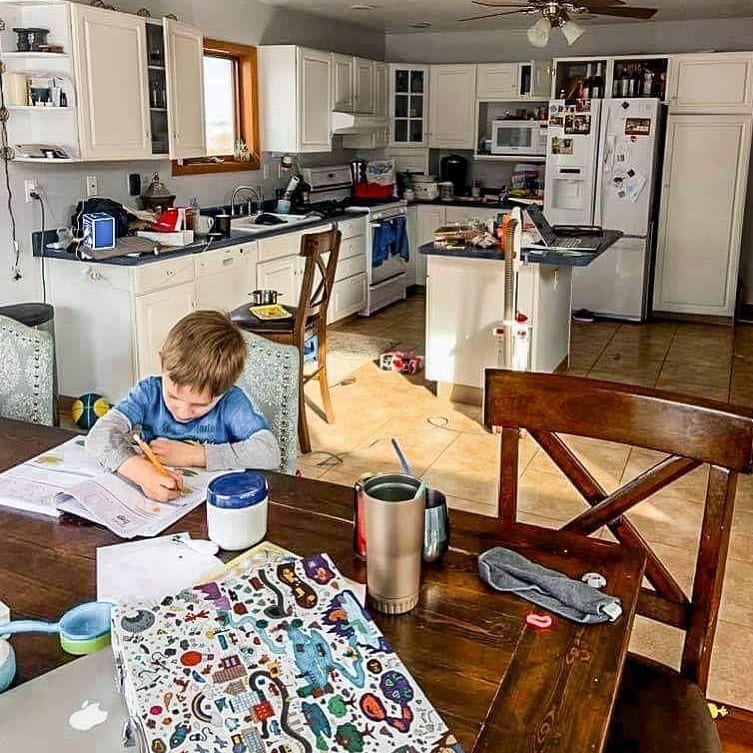
But despite my efforts and the efforts of my kids (yes, I do require them to help), my house still looks like this.
No, this is not a “before” photo. It is a right now photo after the hours I spent cleaning–and I just wanna say this about it:
If you walk into a home that looks like this, don’t assume someone hasn’t been working her (or his) tail off to keep the place inhabitable.
Don’t assume a cleaning schedule needs to be put in place, or that better habits need to be maintained.
Don’t assume no one cares.
Instead, you can safely assume someone probably feels defeated and a bit like she’s failing.
You can assume she’s overwhelmed. Frustrated. Hopeless to the point where she’s considered burning the place down and starting over somewhere new.
You can assume she’s tired. Soooo dang tired.
You can assume she has a ton on her plate. That between her marriage, children, friendships, career, and house, something will inevitably be neglected–and she’s not going to let that something be her family.
You can assume she’s trying really, really hard, but the force of life is more powerful than she is right now.
When you walk into a house that looks like this, comment on the sweetly scribbled artwork hanging on the refrigerator. Tell her you love how her house feels full of life. Tell her you’re grateful she welcomed you into her home. Then offer to watch her kids for a day so she can clean without tiny tornadoes following closely behind (Kidding… Sort of.).
Mostly, just tell her she’s doing a good job.
Because truthfully? The fact is she’s probably been cleaning all day.”
A college professor at the University of Tennessee is earning all the praise after her email response to a student who missed class went viral.
When 21-year-old Morgan King had to miss class because she couldn’t find anyone to watch her 3-month-old daughter Korbyn, she emailed her professor to explain her absence.
The infant’s grandparents usually watch her during the day, but prior commitments that morning left Morgan scrambling. With no other options, she stayed home with Korbyn and was forced to miss her Human Development Class.
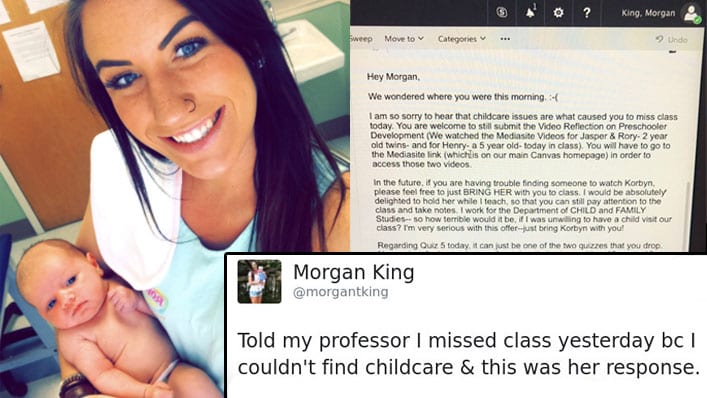
Morgan wasn’t sure of the response she’d get from her professor, having missed a quiz and two study videos. But she never expected what Dr. Sally Hunter wrote in return:
“I’m so sorry that childcare issues are what caused you to miss class today.”
She went on to detail what Morgan had missed, where she could find the videos to study on her own time, and gave her permission to still submit the assignment from the day. Then she encouraged the therapeutic recreation major to do something most professors wouldn’t: bring the baby to class.
“In the future, if you are having trouble finding someone to watch Korbyn, please feel free to BRING HER with you to class. I would be absolutely delighted to hold her while I teach, so that you can still pay attention to the class and take notes.”
She continued:
“I work for the department of CHILD and FAMILY Studies—so how terrible would it be if I was unwilling to have a child visit our class? I’m very serious with this offer—just bring Korbyn with you!”
As if her generous offer wasn’t enough to have Morgan swimming in tears, Dr. H even told her that the quiz she missed would be dropped, and she had counted her absence as “excused.”
Blown away by her professor’s response, Morgan shared a photo of the email on Twitter, which quickly went viral.
“I’m literally crying,” she included at the end of her post.“So blessed/thankful.”
Morgan told local news that it gives her chills just talking about the kind-hearted gesture.
“She really wants me to succeed in her class. That just really spoke majorly to me.”
As for Professor Hunter, Morgan says the educator, who doesn’t have a Twitter, doesn’t believe she’s done anything special—even after learning that she’s “Twitter Famous.”
All the praise for Dr. H! Her heartfelt offer to Morgan speaks volumes to the person and educator that she is. It’s not conventional, but it’s what will help her student succeed. It doesn’t get much better than that.
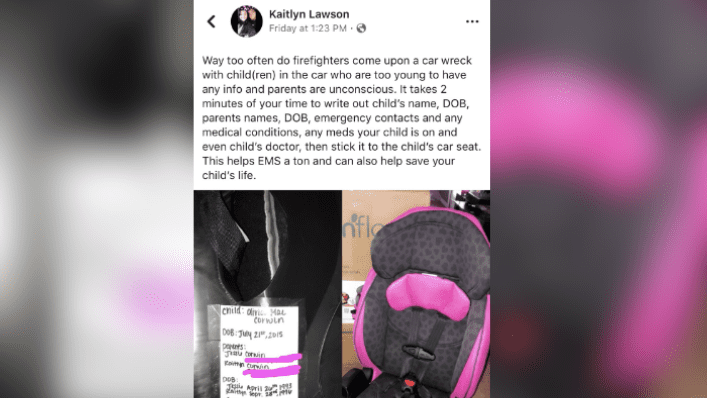
But one EMT and mother named Kaitlyn Lawson from Anderson, Indiana is urging parents to take two minutes of their time to do something SO simple that doesn’t cross the minds of most–until it’s too late.
“Way too often do firefighters come upon a car wreck with child(ren) in the car who are too young to have any info and parents are unconscious,” wrote Kaitlyn in a Facebook post that has now gone viral. “It takes two minutes of your time to write out your child’s name, date of birth, emergency contacts, any medical conditions, any medicine your child is on, and even your child’s doctor, then stick it to the child’s car seat. This helps EMS a ton and can also help save your child’s life.”
The Indiana mom shared an image of the personal info taped to a car seat to demonstrate just how simple this potentially life-saving measure can be.
“Some emergency personnel don’t have time to search through personal belongings to find this kind of information needed, and having it on the car seat helps them a ton when in a quick emergency,” Kaitlyn told Love What Matters. “The sticker is on the side of the car seat, when you open the door, it is very visible.”
She explained that providing the emergency medical team with this info can be critical if the toddler is injured and parents are unconscious.
“You want to make sure your child gets the right medical treatment,” she added. “Having them know the allergies and medications your child is on can give them the right course of treatment, instead of giving them something they may be allergic to.”
This critical information can also help the hospital find personal records or get in contact with the right family members in case of emergency.
“I think it is very important to have this information with your kiddos,” urged Kaitlyn. “You never know what will happen!”
Since the mother’s passionate plea went viral, thousands of concerned parents took her advice to heart and created their own car seat tags.
Saw this on FB & wanted to share it here!!
As soon as I read this, I made one to stick on my child’s car seat pic.twitter.com/RcG1U6EAkI
After spending four days at the Coalition to End Sexual Exploitation Summit in Houston, Texas, my brain is very tired. We heard lectures on neuroscience, human trafficking, sexual abuse, child exploitation, and so much more. And we heard many, many lectures on the poison that is seeping in everywhere, fueling sexual abuse, destroying relationships, breaking down the ability of men to function, and obliterating childhood: pornography.
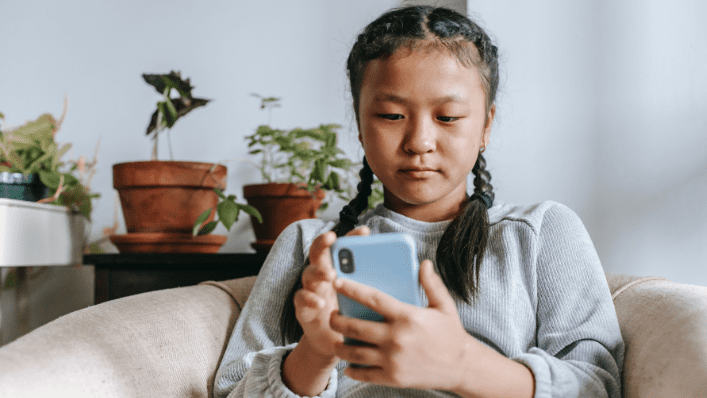
I’ll be writing a lot more about what I’ve learned (read my reports from the conference here, here, and here) but for now I’d like to make one simple plea to parents, something nearly every speaker and every lecturer advised: Don’t give your children smartphones.
It’s crazy to think that a decade ago, smartphones were uncommon. Many people didn’t even own a cell phone. Now, as we heard from Vanity Fair journalist and author of American Girls: Social Media and the Secret Lives of Teenagers Nancy Jo Sales, nearly every social interaction – and sexual interaction – of teenagers is shaped by the tiny, always-throbbing devices they carry with them wherever they go. This has given rise to cyber-bullying and a spate of suicides, sexting and sexual exploitation of teens by teens, and the nearly non-stop viewing and amateur production of pornography. Teenagers – and children – are pulled into the social webs woven from Facebook to Instagram, from Snapchat to a half-dozen other underground cyber-settings, the interactions and content curated only by the children who populate them, free of parental or adult supervision.
Teenagers know that it’s making their lives miserable. The girls Sales talked to told her so. They also said that they had no way of getting out. Much of life is now lived online, and to opt out is to engage in voluntary isolation. The currency is often nude or sexually explicit pictures or “selfies”—and increasingly, that’s often non-optional, too.
Parents cannot control the new world of teenagers. In many cases, they cannot even penetrate it. That is why one man was so bewildered when his daughter hung herself after a teenager cruelly posted a video of her in the shower on Snapchat—that was the first time the girl’s bereaved father had ever even heard of Snapchat. For parents who wish to rescue their children from the cyber-jungle or spare them the pain that is engulfing millions, there are a number of answers. Open communication and open conversations. Attempted oversight of social media use. Accountability software and filters on all technological devices.
But for today, I just want to push one: Don’t give your children smartphones.
This advice has made me very unpopular in some circles—one teenager greeted me at a high school presentation by saying balefully, “So you’re the one who told my parents I shouldn’t have a cellphone.” But it is essential. Children, and most teenagers, do not need a phone with Internet access. They do not need nonstop access to social media sites that put them under the influence of their peers rather than adults. They do not need the social pressure that inevitably – inevitably – comes with entering a cyber-world of teenagers with new standards and new currency. And above all, they should not have access to all the pornography the web can offer, vile material that is setting new sexual standards teenagers across North America and beyond are beginning to conform to, through pressure, through force, or by choice.
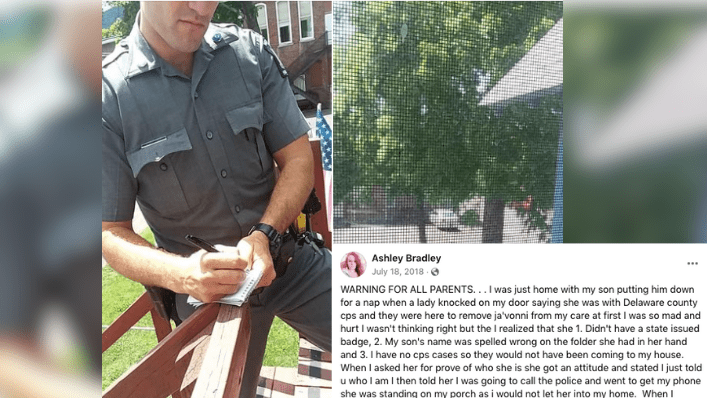
A mom from New York took to Facebook after a disturbing encounter took place at her home with a FAKE CPS worker.
Ashley Bradley had just put her son, Ja’vonni, down for a nap when a woman she did not know came knocking at her door.
The stranger told Ashley that she was with Delaware County Child Protective Services and was there to remove the 9-month-old boy from her care.
“At first, I was so mad and hurt, I wasn’t thinking right,” Ashley wrote on Facebook. “But [then] I realized that she 1. Didn’t have a state issued badge, 2. My son’s name was spelled wrong on the folder she had in her hand and 3. I have no cps cases so they would not have been coming to my house.”
The whole thing sounds totally bizarre, but also, TERRIFYING.
Ashley says upon realizing that something wasn’t right with this situation, her mama bear instincts kicked in. The stranger became frustrated and gave Ashley an attitude when she began pressing the woman for proof of who she was and what she was actually there to do.
Then Ashley told the woman she needed to step away for a minute to grab her cell phone—which she planned on using to contact police.
“She was standing on my porch, as I would not let her into my home. When I walked back out into my living room from getting my phone, she was walking very fast around the corner of my house.”
Ashley immediately went to check on her son, who was safe in his crib, and contacted authorities.
They told her that while scary, this scenario is not uncommon.
Human trafficking has no age limit. Several people from different states and foreign countries are in the market for money-making children. They use fear tactics on parents to kidnap kids like Ja’vonni, and force them into a lifetime of slavery.
Thankfully, Ashley was able to see through the scam, but that doesn’t make the whole thing any less frightening. This is happening in our neighborhoods. Our kids have a target on their backs, and it is our job to educate ourselves and protect them.
In sharing her story, Ashley hopes her experience serves as a warning to all parents of the new and terrifying threats to families and children.
If you ever find yourself in a position like Ashley, report the encounter to police.
As a mom, I kind of hate it when people start talking about “back to school” in June, but recently, I was posed a question that is relevant to talk about no matter what time of year it is. A friend asked me, “Would you send your college kid to school with Narcan?”
As the mom of a certified college kid who is going into his second year on a large campus I can say, “Absolutely yes. Yes I would send him to campus with Narcan.”
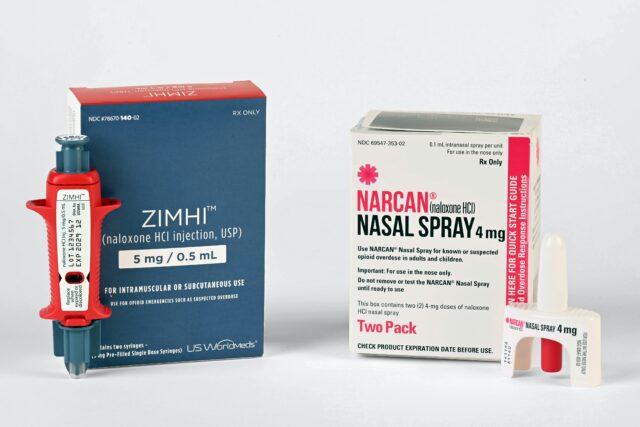
Feel free to judge me, but first, I guess I should explain what Narcan, or Naloxone (Narcan is a brand name) is so you can judge with information. Knowledge is power, after all! The Substance Abuse and Mental Health Services Administration says:
“Naloxone is a medication approved by the Food and Drug Administration (FDA) designed to rapidly reverse opioid overdose. It is an opioid antagonist—meaning that it binds to opioid receptors and can reverse and block the effects of other opioids, such as heroin, morphine, and oxycodone. Administered when a patient is showing signs of opioid overdose, naloxone is a temporary treatment and its effects do not last long. Therefore, it is critical to obtain medical intervention as soon as possible after administering/receiving naloxone.”
Photo via Unsplash // Pharmapix
Why Send Kids to School with NARCAN?
Basically, it temporarily saves the life of anyone overdosing on opioids. Squirt some NARCAN up the nose of someone in the process of OD-ing, and you most likely have time to get them additional life-saving medical treatment.
And it is my opinion, but it is also stone-cold fact that the lives of these Image-bearers of God who are struggling with opioid abuse disorder are very worth saving. And, because these opioids people are buying are sadly often laced with deadly amounts of the super-opioid fentanyl, Narcan is very, very necessary to save these lives. So, would I let my 19-year-old kid carry it in case he sees someone in opioid distress on his college campus? I absolutely would.
Opioid overdose isn’t just a problem in college populations or among struggling adults. It’s even a problem with teenagers. In fact, the Los Angeles Unified School District recently announced it will allow its high school students to carry Narcan after a 15-year-old died of an opioid overdose at school. Since, as the superintendent explained in a letter to parents, Narcan “does not have any effect on a person if there are no opioids in their body” and is not addictive, I have no problem with that, either.
Public spaces including schools have defibrillators on site in case someone has a heart attack, and to me, students or staff carrying Narcan is no different. Lives are worth saving, period. There is always hope in Christ for a person to recover and go on to live a beautiful life. But they have to be given that chance. So yeah, if my 19-year-old sees someone on campus that’s nearly lifeless from heroin, oxy, fentanyl, etc.—I want him to jump in an help. And pretty much the only way he can effectively help his fellow student is with Narcan.
It’s really not a controversial decision for me. A friend of mine’s brother passed away a few years ago from an opioid overdose. She and her mom miss him every day. Unfortunately he was alone at the time, and no one could save him. But his mom regularly posts on Facebook letting people know that she has Narcan to distribute and volunteering to show people how to use it, because she knows that the people who need it are valued and loved, and she doesn’t want anyone else to go through what she’s been through: the loss of her beloved boy who had relapsed and just needed a helping hand.
I have also learned from years of writing about parenting that this grieving mom’s child could have been my own. Hear me when I say this, parents: opioid overdose doesn’t care where you come from, how good of a parent you are, or how “smart” your kid is. Good kids make bad decisions. The minute we think ours would “never,” we are sticking our heads in the sand. Talk to your kids, and be prepared.
Would you let your college kid carry Narcan? Mine is 19 and can technically do what he wants, but you know what? If I thought it was necessary, and her school would allow it, I’d let my high school kid carry it, too.
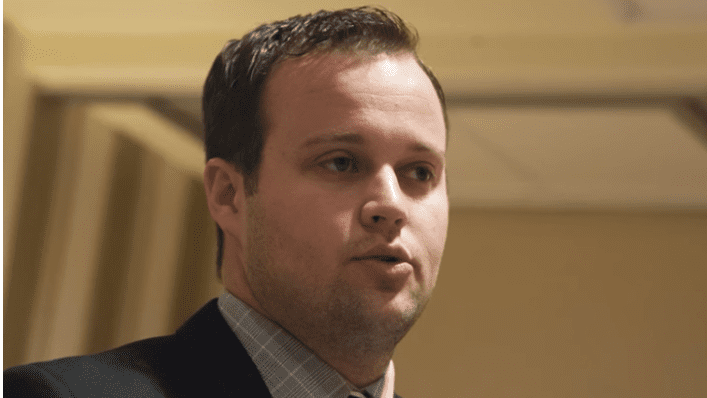
It’s been over two years since Josh Duggar was transferred to FCI Seagoville in Texas to serve out his 12-year prison sentence on charges related to child sexual assault material. During his time behind bars, Duggar has reportedly been keeping himself busy — in a rather surprising way. According to a source close to the situation, the former reality TV star has been signing autographs for fellow inmates’ families, turning his notoriety into an unusual keepsake.
A Celebrity Status Behind Bars
Before his criminal activities came to light, Josh Duggar was the eldest son in one of America’s most famous reality TV families, the Duggars, known from the show “19 Kids & Counting.” Despite his crimes, it appears his celebrity status has followed him into prison. According to The U.S. Sun, Duggar has been signing autographs on newspaper articles about himself for the family members of other inmates.
“Josh has been signing autographs on newspapers articles about him for prisoners’ family members,” an insider shared. It seems there are still fans of the Duggar familywho are eager for this peculiar memento, even under these circumstances.
An Unusual Keepsake
The fact that Duggar’s notoriety continues to garner interest, even behind bars, might come as a surprise to some. But it seems that in the microcosm of prison life, his past fame still holds some allure. This isn’t Duggar’s first time finding himself at the center of controversy while incarcerated. Last year, he was caught with a contraband cellphone, an incident that led to a stint in solitary confinement, reinforcing the perception that he may feel above the rules.
Increased Scrutiny and Contraband Issues
FCI Seagoville has faced its share of challenges, especially regarding contraband. Earlier this year, a new warden was appointed and has since implemented stricter regulations to curb the flow of illegal items. In February, The Sun reported that Duggar’s unit had a significant increase in contraband, including alcohol, prompting a crackdown by the new warden.
“They got a new warden at Seagoville, and she’s been posting notices about contraband saying that if contraband is found in one cell in one unit, the whole unit will get shut down and lose privileges,” an insider revealed. The recent shakedowns have reportedly resulted in the discovery of various prohibited items, leading to stricter enforcement of the rules.
Public Perception and Future Implications
Given Josh Duggar’s criminal record, the idea of him signing autographs may seem bizarre to the public. However, it just proves the complex dynamics of prison life, where notoriety can be leveraged in unexpected ways. Despite his attempts to maintain a semblance of his former life, Duggar’s actions continue to spark controversy.
Duggar’s appeal to the Supreme Court was denied last month, cementing his release date no earlier than October 2032. This means that for the foreseeable future, his attempts to navigate life behind bars — including his autograph scheme — will continue under the watchful eye of the prison authorities. The new warden, particularly focused on eliminating contraband, may not take kindly to Duggar’s latest antics, potentially leading to further disciplinary actions.
A Divisive Figure
Josh Duggar remains a divisive figure. For many, his past actions overshadow any remnants of his reality TV fame. Yet, within the confines of FCI Seagoville, his celebrity status seems to provide a unique kind of currency. Whether signing autographs or navigating the complexities of prison life, Duggar’s journey continues to attract attention, albeit for reasons far removed from his days on “19 Kids & Counting.”
As Duggar serves out his sentence, the story of his time behind bars adds another layer to the already complex story of his life. While his actions have led to widespread condemnation, his ability to maintain a semblance of his former celebrity status within prison walls highlights the enduring — and often perplexing — nature of public fascination with figures who fall from grace.